Cell cycle check point By KK Sahu Sir Biology Diagrams Adaptation to the DNA damage checkpoint is a phenomenon long thought to be confined to the unicellular world. A new report in this issue of Cell by Yoo and colleagues (2004) suggests the presence of a checkpoint adaptation pathway in Xenopus egg extracts that displays interesting molecular parallels to adaptation in yeast.
Author summary Cell proliferation can be arrested by stimuli that disrupt key events of cell division. To protect themselves from faulty replication, cells in such conditions avoid completing cell division but stall at specific stages of the cell cycle. We investigated the consequences of prolonged but transient stalling in mitosis. We show that cells become prone to undergo errors in

Cell Cycle Regulation by Checkpoints Biology Diagrams
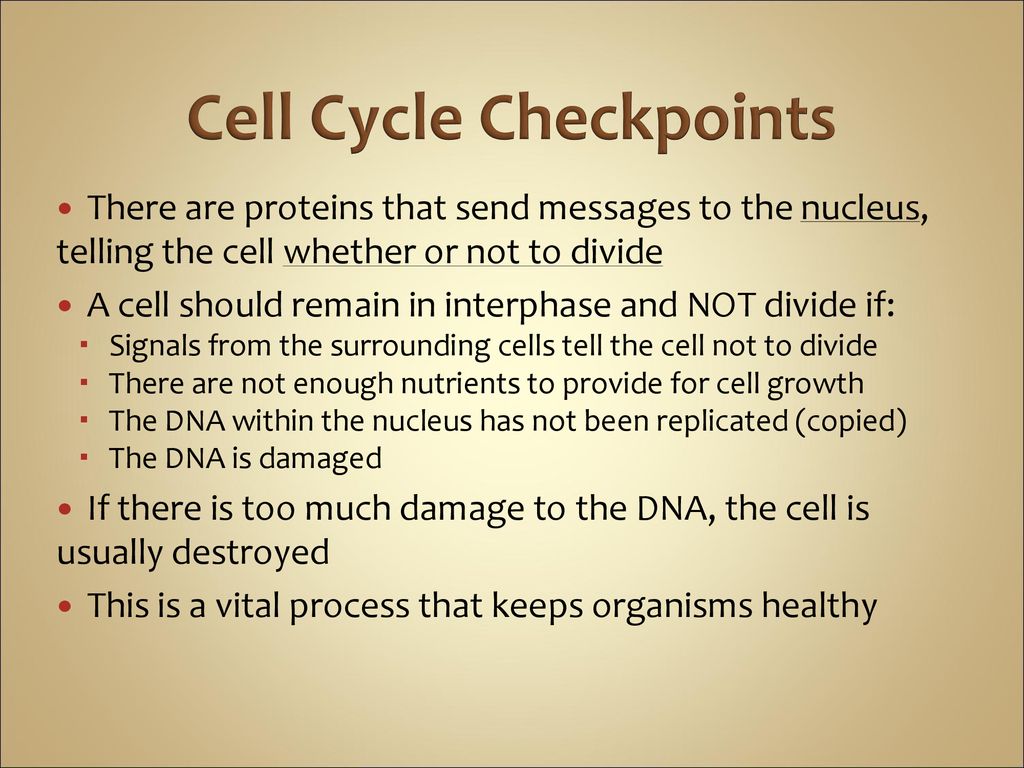
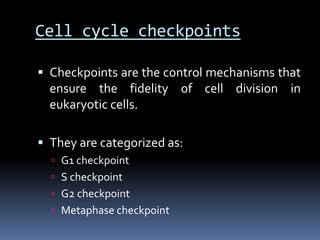
Cell cycle checkpoints are surveillance mechanisms that monitor the order, integrity, and fidelity of the major events of the cell cycle. These include growth to the appropriate cell size, the replication and integrity of the chromosomes, and their accurate segregation at mitosis. Many of these mech …

Cell cycle checkpoints are surveillance mechanisms that monitor the order, integrity, and fidelity of the major events of the cell cycle. These include growth to the appropriate cell size, the replication and integrity of the chromosomes, and their MCPH1 function, a centrosomal protein that modulates chromosome condensation and cell cycle progression, is required to confer cellular adaptation to the DC, which means spontaneous checkpoint Here, I discuss the current evidence for checkpoint adaptation in human cells and possible mechanisms and implications of this phenomenon.

TOP2A inhibition and its cellular effects related to cell cycle ... Biology Diagrams
This process allows cells to re-enter the cell cycle and continue proliferating despite the presence of a limited number of unrepaired lesions. This process was initially described in Saccharomyces cerevisiae by Toczyski and Hartwell in 1997. 2 More recently, checkpoint adaptation has been observed in higher organisms -including humans- and By examining the different mechanisms of TOP2A inhibition and their impact on cellular processes, this study contributes to a deeper understanding of the regulation and physiological implications of the DC and checkpoint adaptation in non-carcinogenic cell lines.